A medical device is only as safe as its label. The label tells people how to use the device, what the risks are, and how to trace it. Get it wrong, and the product can be recalled. Medical device labeling is one of the most error-prone parts of bringing a device to market.
The rules are complex. They differ by country and change often. Checking labels by hand is slow and risky. This guide explains how AI automates the work, and how it helps teams stay compliant without the usual delays.
Our engineers will audit your workflow and estimate time-to-value at no cost.
Claim your free audit
What Is Medical Device Labeling?
Medical device labeling covers all the printed and digital information supplied with adevice. It includes labels, packaging, instructions for use, symbols, and udi labeling. It is partof a device's wider medical device documentation and must meet the rules of every market where the device is sold.
Labeling is more than a sticker. It is the full set of information that comes with a device. This includes the label, the instructions for use, warnings, symbols, and the unique device code.
Labeling is not a one-time task. It must stay correct as rules change, as the device is updated, and as it enters new markets.
Why Labeling Errors Are So Costly
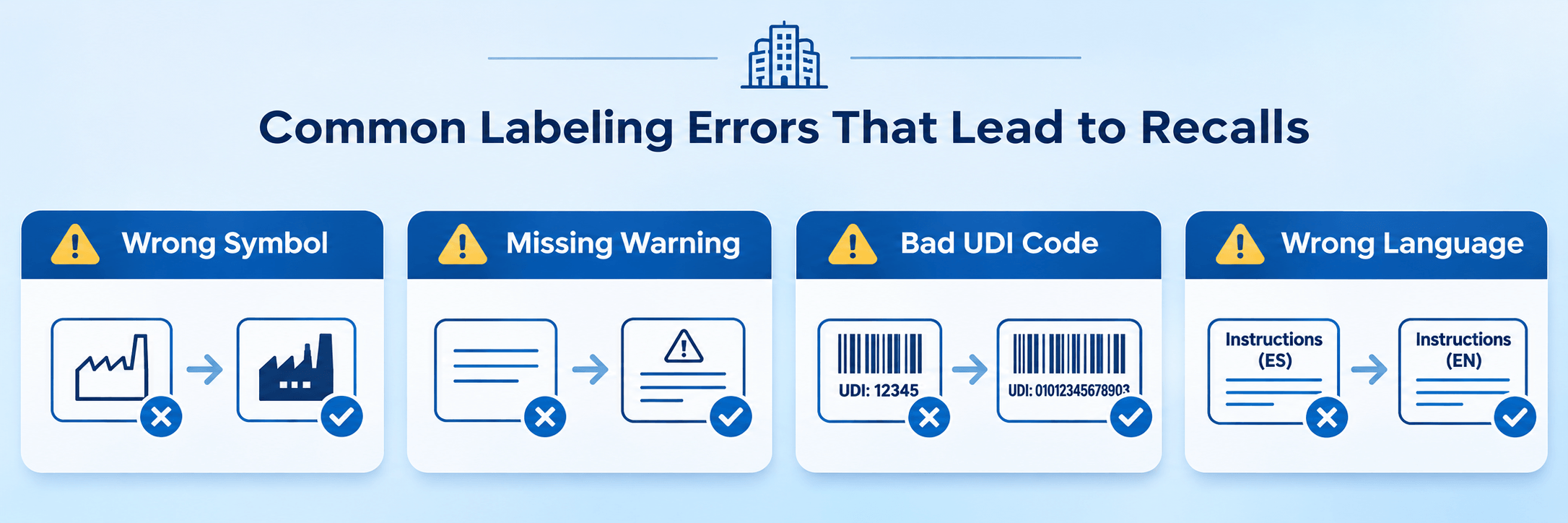
A small labeling mistake can have big results. A wrong symbol, a missing warning, or a bad code can trigger a recall. Recalls are expensive. They harm patients, delay sales, and damage trust.
Labeling sits at the heart of medical device regulatory compliance. When labels are wrong, the whole compliance record is at risk. Getting labeling right is one of the simplest ways to avoid costly recalls.
Medical Device Labeling Requirements: FDA, EU MDR, and UDI
Every major market has its own rules. A device sold in several regions must meet all of them. Here are the main medical device labeling requirements to know.
FDA labeling rules
In the US, the FDA sets clear rules for labels. They must state the intended use, carry the right warnings, and include a UDI. The information must be clear and not misleading.
EU MDR labeling requirements
The EU is stricter in some areas. Labels must use set symbols, cover many languages, and feed data into EUDAMED. For a deeper look, see our guide to eu mdr labeling requirements and EUDAMED.
UDI requirements
The Unique Device Identification system gives each device a unique code. udi labeling lets regulators and hospitals track a device through its wholelife. Both the FDA and EU MDR require it.
Here is a quick view of the three frameworks side by side:
How AI Automates Medical Device Labeling
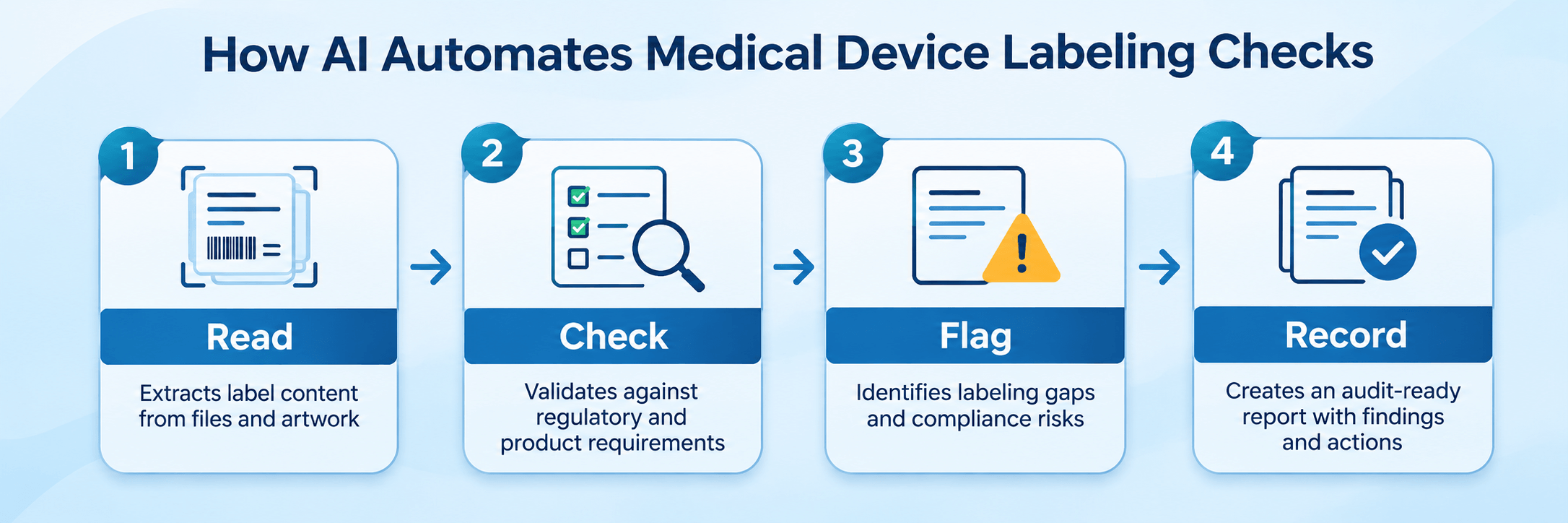
AI does the reading and the checking. It does not replace the expert. A good medical device labeling software built on AI works in four clear steps.
- Read the label and documents
The system reads the label, the instructions, and the related files. Text, symbols, and codes are all captured. - Check against the rules
AI compares each element against FDA, EU MDR, and UDI rules at once. This is where regulatory compliance automation saves the most time. - Flag the gaps
Where something is missing or wrong, the system flags it. The team gets a clear list of fixes, not a pile of pages. - Keep a record
Every check is logged and linked to its rule. This builds a clean audit trail for each label.
This is where ai in regulatory affairs proves its value. Pace Wisdom builds AI agents for medical device regulatory compliance that check labels against every market rule before release.
Benefits of Labeling Compliance Automation
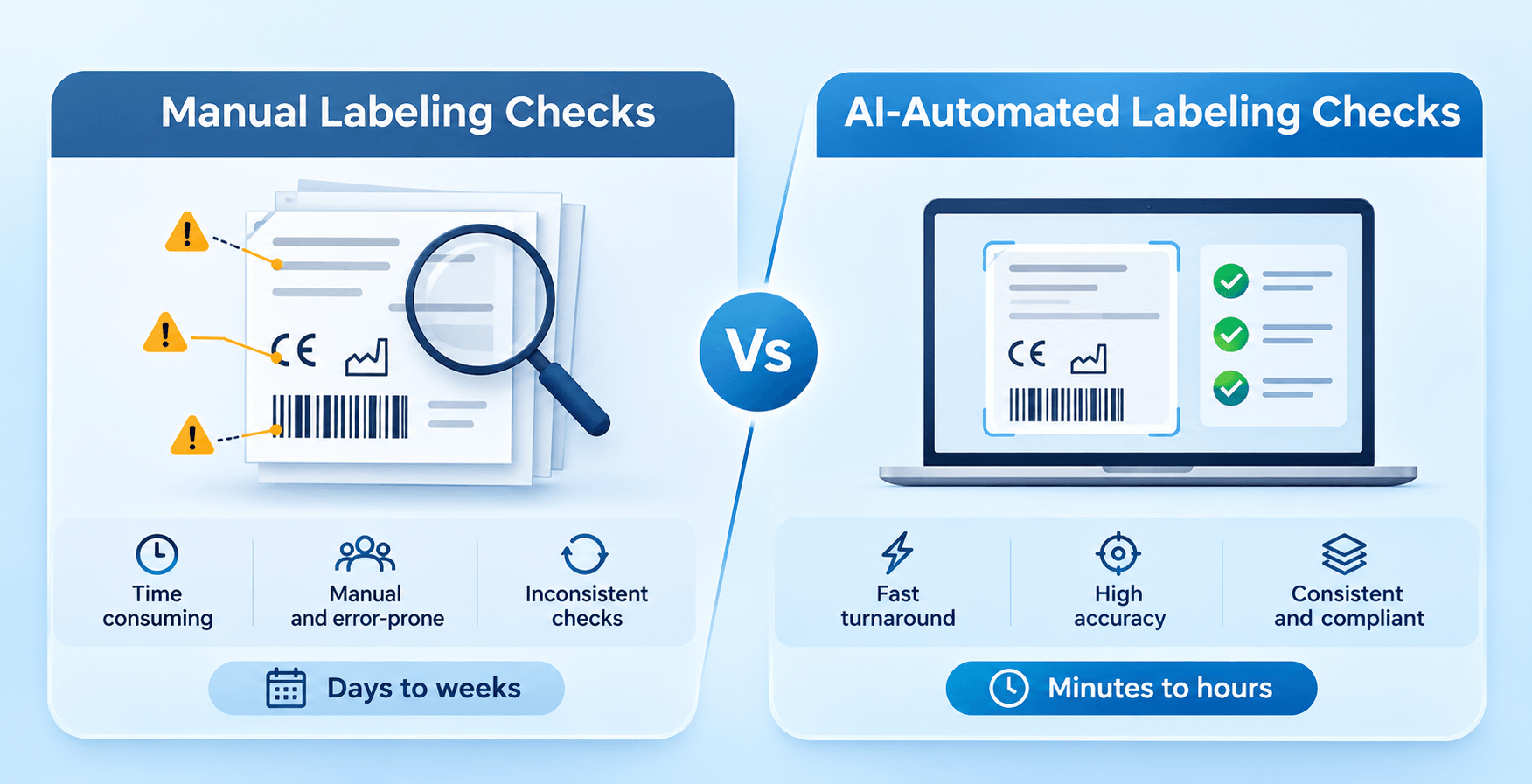
The move from manual checks to AI is not just faster. It is more accurate and easier to scale across markets.
Demand for these tools is growing as rules get tighter.
In short, AI turns labeling from a slow, manual risk into a fast, reliable check. Teams catch errors early and ship with confidence.
Governance and Human Oversight
AI in a regulated setting must be governed with care. The output has to be trusted, and the process has to hold up in an audit.
A sound setup covers four controls:
- Validation. The system is tested and documented.
- Traceability. Every check links to its source rule.
- Audit trail. Who approved what, and when, is recorded.
- Data security. Sensitive product data stays protected.
Key Takeaways
Conclusion
Labeling is a small part of a device with a large impact. One error can trigger are call. Medical device labeling done well protects patients and keeps products on the market.
AI makes this far easier. It reads, checks, and records every label against every rule, so experts can focus on judgment, not clerical work. Pace Wisdom Solutions partners with life sciences teams to build these labeling and compliance workflows with governance built in from day one.
We'll map the exact workflows from this article to your business - free, in 30 minutes.
Frequently Asked Questions
What is medical device labeling?
It is the full set of information supplied with adevice: the label, instructions, warnings, symbols, and the UDI labeling code. It must meet the rules of every market where the device is sold.
What are the main medical device labeling requirements?
Core medical device labeling requirements come from the FDA, the EU MDR, and the UDI system. They cover intended use, warnings, symbols, languages, and a unique device code.
How does AI help with labeling compliance?
AI reads a label and checks it against FDA, EU MDR, and UDI rules at once. It flags errors before release. This regulatory compliance automation cuts mistakes and speeds approvals.
Can AI replace regulatory experts in labeling?
No. AI reads, checks, and flags. A qualified professional reviews and approves every result. AI speeds the work, but people still own each compliance decision.
What is UDI in medical device labeling?
UDI stands for Unique Device Identification. It gives each device a unique code. UDI labeling lets regulators and hospitals track a device through its full life, and both the FDA and EU MDR require it.
You may also want to read