Agentic AI automation is transforming enterprise workflow automation by enabling intelligent AI agents to autonomously plan, execute, and optimize complex business processes. Powered by large language models (LLMs), these agents can understand context, make decisions, and coordinate actions across multiple systems, moving beyond traditional rule-based automation. From procurement and operations to customer support and incident resolution, enterprises are adopting agentic AI to automate multi-step, decision-driven workflows with greater speed, adaptability, and scalability.
What Is Agentic AI Automation?
Agentic AI automation refers to AI systems that can independently pursue goals, make decisions, and take actions across tools and platforms — without waiting for human instruction at every step. This is a meaningful leap from two earlier technologies:
- Robotic Process Automation (RPA): Follows fixed scripts; breaks when anything changes.
- Basic chatbots: Answer questions but cannot take independent action.
- Agentic AI: Sets sub-goals, monitors progress, calls APIs, queries databases, and adapts in real time.
Our engineers will audit your workflow and estimate time-to-value at no cost.
Claim your free audit
Key Traits of Enterprise-Ready Agents
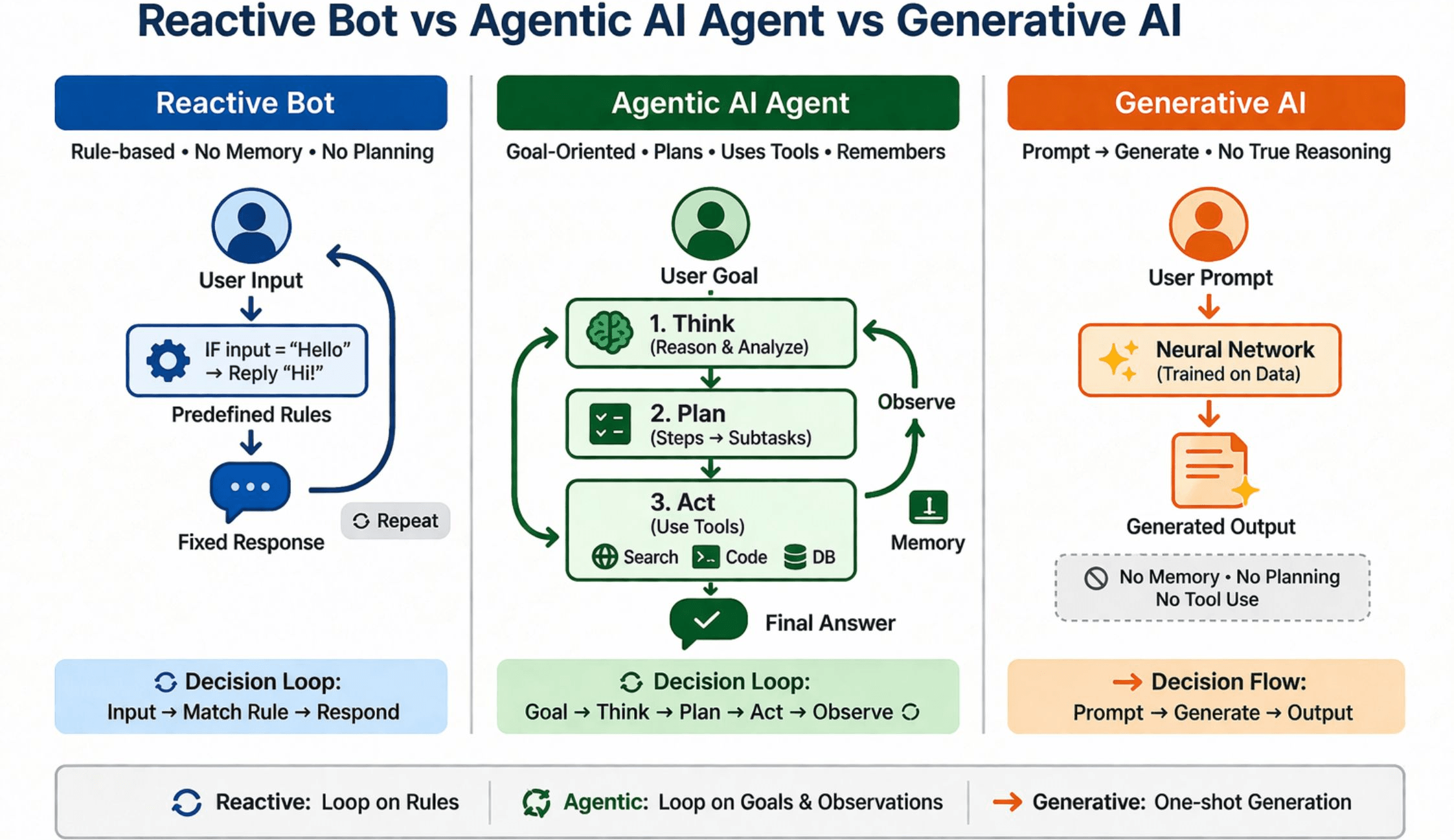
- Goal-oriented: Breaks a high-level objective into smaller, executable tasks.
- Context-aware: Remembers earlier steps and adjusts next actions accordingly.
- Self-monitoring: Detects errors and retries or escalates intelligently.
- Tool-calling: Connects to APIs, databases, ERP systems, and third-party services seamlessly.
Why Enterprises Are Turning to Agentic AI
Enterprises face workflows that are too complex for simple bots but too time-consuming for human teams alone. Agentic AI steps in to handle approvals, vendor onboarding, compliance checks, and IT incident resolution — tasks that span multiple systems and require real judgment.
From Pilots to Production-Scale Systems
Enterprises are no longer just experimenting. According to a 2025 PwC survey of 300 senior executives, 79% say AI agents are already being adopted in their companies, and 66% of those adopters report measurable productivity gains. Meanwhile, 88% plan to increase AI-related budgets in the next 12 months specifically because of agentic AI.
The Role of Agentic AI Platforms
Agentic AI platforms provide the orchestration layer that connects agents to enterprise systems — ERP, CRM, HRMS, and cloud services. As BCG reports, these platforms are shifting enterprise software from static systems to dynamic systems that reason and automate end-to-end. The right platform handles security, logging, and compliance alongside workflow execution.
We'll map the exact workflows from this article to your business - free, in 30 minutes.
Agentic AI Use Cases in Enterprise Workflows
Here is where agentic AI creates the most immediate, measurable value across enterprise departments.
Customer Service and Support
Agents handle ticket triage, routing, and resolution without human intervention for routine cases. BCG research reports up to a 60% reduction in manual workloads during ticket-handling pilots. Agents escalate only genuinely complex issues, freeing support staff for high-value interactions.
Sales, Marketing, and Revenue Operations
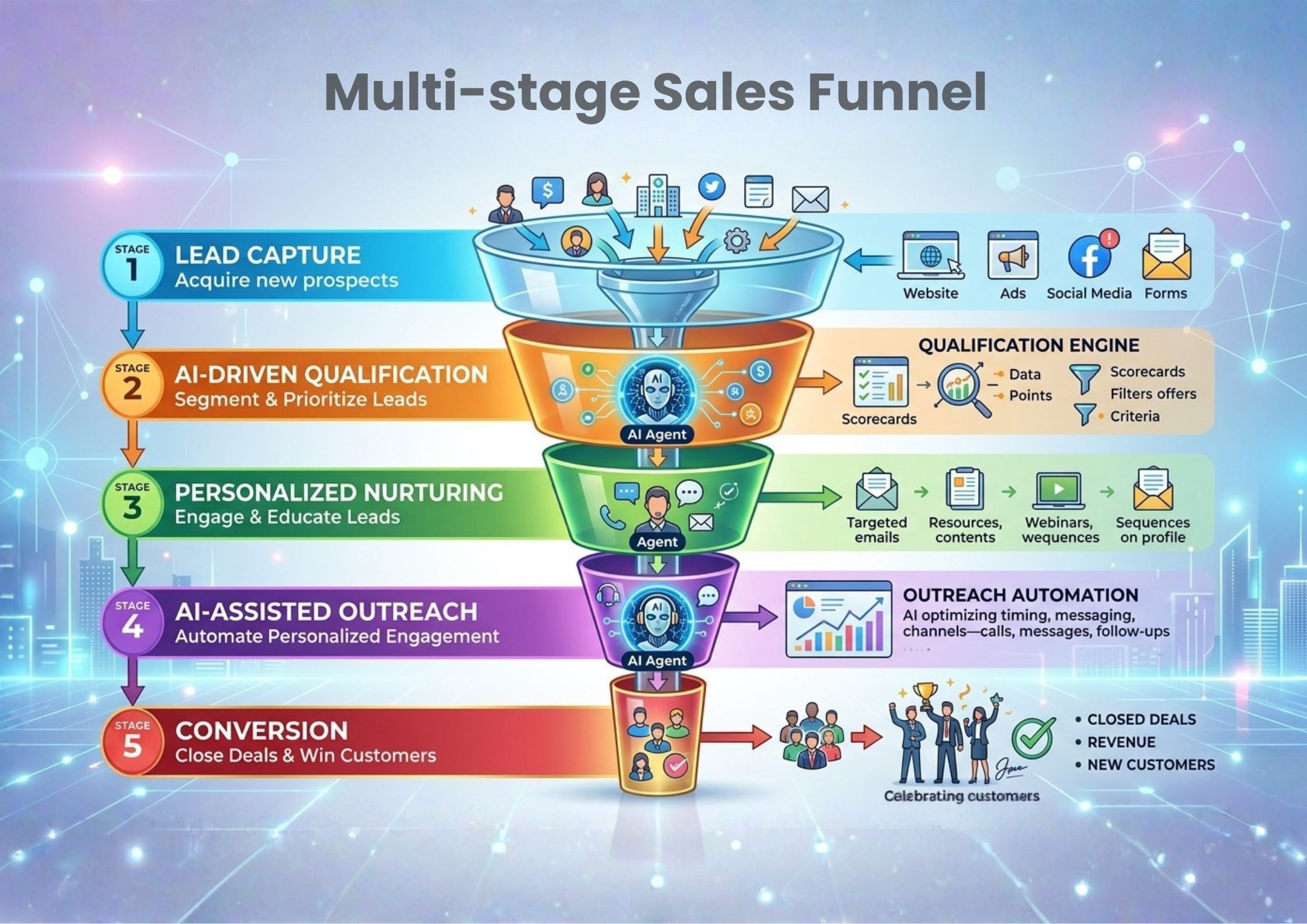
Agentic AI drives AI-driven business process automation across the entire revenue funnel:
- Lead scoring and qualification based on real-time behavioral signals.
- Personalized outreach sequences triggered automatically by intent data.
- Campaign execution and performance optimization without manual adjustment.
Finance, Risk, and Compliance
Finance teams use agentic AI for anomaly detection in transactions, cash-flow forecasting, and allocation recommendations. Agents create traceable audit trails automatically — a critical advantage for regulated industries where explainability is non-negotiable.
IT Operations and Internal Support
IT teams deploy autonomous workflow automation for incident management. When a system alert fires, agents diagnose the issue, apply known fixes, log the action, and only escalate if the fix fails. Self-healing workflows reduce mean time to resolution (MTTR) significantly.
Retail and E-Commerce
Retailers use agentic AI for dynamic pricing, demand forecasting, and hyper-personalized product recommendations. Read more in our Retail and E-Commerce Solutions page.
How Agentic AI Automation Drives Business Value
Time and Cost Savings
Beyond headline numbers, the savings compound across three dimensions: faster task completion, lower error-correction costs, and reduced headcount dependency for high-volume, low-judgment work.
Error Reduction and Compliance
Human error is most common in repetitive, high-volume tasks — exactly where agentic AI excels. Every agent action is logged with timestamps, inputs, and outputs, creating audit-ready trails that satisfy compliance requirements in finance, healthcare, and legal sectors.
Scalability and Workforce Augmentation
Enterprise AI agents can process thousands of tasks simultaneously without the costs associated with scaling a human team. Staff are redeployed to strategic, creative, and relationship work — the areas where human judgment genuinely adds value.
Building Agentic AI Workflows for the Enterprise
Designing AI-Driven Workflows
Start by auditing existing processes to find the right loops for agentic AI automation:
- Map all steps, decision points, and exception-handling paths.
- Identify steps that are rule-based, high-volume, or require data from multiple sources.
- Flag steps that require human judgment — keep those human.
Agent Roles and Orchestration
In multi-agent AI systems, a central orchestrator assigns tasks to specialized agents — one for data retrieval, another for decision logic, another for notifications. This mirrors how a human team is organized: a project manager coordinating specialists. For a detailed look at how this works in practice, see Centric Consulting's breakdown of Agentic Workflows.
Integrating with Existing Enterprise Stacks
Intelligent automation with AI agents works best when agents connect to the systems already in place. Common integrations include:
- ERP systems (SAP, Oracle) for finance and supply chain data.
- CRM platforms (Salesforce, HubSpot) for sales and customer data.
- HRMS platforms for onboarding, payroll, and workforce data
- Cloud platforms (AWS, Azure, GCP) for compute and storage.
Agentic AI Trends Shaping Enterprise Automation
The Move Toward Autonomous Operations

The trajectory is clear: experimentation is giving way to enterprise-scale deployment. For a broader view of where this is heading, read our AI Agent Trends 2026 overview.
Rise of Secure, Governed Agentic AI Platforms
Governance is now a first-class feature of agentic AI platforms, not an afterthought. Regulated industries — banking, insurance, healthcare — require:
- Role-based access controls so agents only touch authorized data.
- Human-in-the-loop checkpoints for high-risk decisions.
- Explainability logs that show exactly what the agent did and why.
- Data privacy controls compliant with GDPR, HIPAA, and sector-specific regulations.
Conclusion: Agentic AI Automation Is the Next Step for Enterprises
Agentic AI automation delivers on the three things every enterprise needs: speed, cost savings, and scalability. Unlike RPA or basic chatbots, autonomous workflow automation handles ambiguity, adapts to change, and connects across every system your business relies on.
The best starting point is a focused pilot in customer service, finance, or IT operations. Measure ticket-resolution time, conversion lift, or error rates in that one workflow. The data will make the business case for scaling across the enterprise.
Pace Wisdom Solutions helps enterprises design, build, and deploy agentic AI systems tailored to their existing tech stack and compliance requirements. Explore our AI & ML Development Services to plan your next move.
Frequently Asked Questions (FAQs)
1. What is agentic AI automation and how does it differ from traditional automation?
Agentic AI automation uses goal-driven, context-aware AI agents that plan and act independently across tools and systems. Traditional automation (RPA) follows fixed rules and breaks when inputs change. Agentic AI adapts, reasons, and handles exceptions without rewriting the script.
2. Which enterprise departments benefit most from agentic AI agents?
Customer service (ticket triage), IT ops (incident management), finance (anomaly detection), HR (onboarding), supply chain (demand forecasting), and sales (lead qualification) all see strong, measurable returns from early deployments.
3. How do multi-agent AI systems work in enterprise workflows?
A central orchestrator assigns tasks to specialized autonomous AI agents — each handles one function (data retrieval, decision-making, or notification). They operate in parallel and pass results between each other, completing complex workflows far faster than a single agent or human team.
4. What are the biggest challenges of implementing agentic AI in enterprise?
The main challenges are data integration complexity, hallucination risks from large language models, governance gaps in regulated industries, and organizational change management. Addressing these upfront through structured pilots and governance frameworks reduces risk substantially.
5. How long does it take to deploy AI agents for enterprise workflows?
A focused pilot typically takes 6–12 weeks to design, build, and validate. Enterprise-wide deployment across multiple departments usually takes 6–18 months, depending on integration complexity and change management scope.
6. How do enterprises measure ROI from agentic AI automation?
Key metrics include task completion time, error rate reduction, cost per automated process, headcount efficiency, and ticket resolution speed. Tracking before-and-after data from your pilot workflow gives you the clearest ROI signal for scaling decisions.
7. Is agentic AI automation secure enough for regulated industries?
Yes, when built with proper governance. This includes role-based access controls, full audit trails, human-in-the-loop checkpoints for high-stakes decisions, and data privacy controls compliant with GDPR, HIPAA, or sector-specific regulations.
You may also want to read