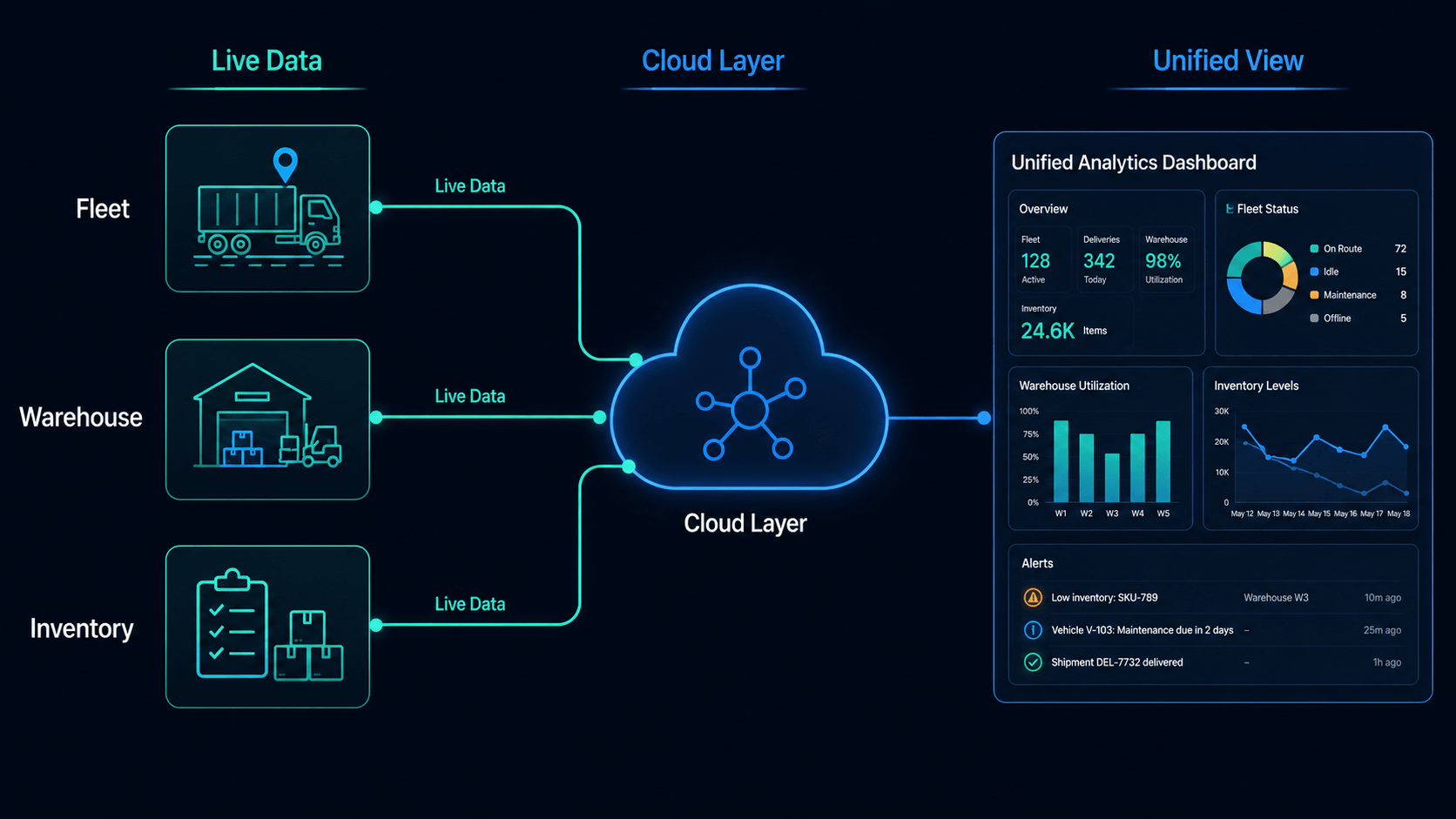
Logistics businesses lose an estimated 20 to 30 percent of operational efficiency to fragmented systems. Fleet software that does not talk to the warehouse, inventory data that updates overnight instead of in real time, and route planning that happens in spreadsheets no one outside dispatch can see. Cloud integration for logistics closes each of those gaps on a single connected platform.
For fleet operators and warehouse managers, the shift is from reacting to problems after they have already cost money to preventing them with live data. A delivery running late, a vehicle showing a fault indicator, a warehouse zone running low on stock. A connected fleet management software platform surfaces all of it in real time across every operation without manual reconciliation.
This article explains how cloud integration works across fleet management and warehouse operations, where the measurable cost reductions come from, and what a unified cloud logistics architecture looks like when it is running at full capability.
Why Logistics Operations Are Moving to the Cloud?
Traditional logistics technology was built around isolated systems. Fleet management ran on a local server at the depot. Warehouse inventory lived in a separate application that updated overnight. Route planning happened in a spreadsheet that no one outside the dispatch office could see. Each system worked in isolation, which meant that a delivery delay, a stock discrepancy, or a vehicle breakdown required manual coordination across multiple tools and teams before anyone had a complete picture.
The cost of that fragmentation is not always visible on a single invoice. It accumulates in missed delivery windows, emergency restocking costs, over-maintained vehicles, and the management hours spent bridging systems that were never designed to communicate with each other.
Cloud integration for logistics means every operational system, including fleet management, warehouse operations, inventory control, and route planning, connects to a single data layer that updates in real time. A driver completes a delivery. The WMS updates stock automatically. The route optimizer recalculates the next run. The operations manager sees it all on one screen without making a single manual update. Businesses beginning this migration can start with a structured cloud transformation services assessment to identify which systems to migrate first and in what sequence for maximum operational impact.
How Cloud Integration Transforms Fleet Management?
For fleet operators, the shift to cloud-based fleet management software delivers four capabilities that on-premise systems structurally cannot match: continuous live visibility, dynamic route optimization, predictive maintenance, and real-time coordination with warehouse systems.
Our engineers will audit your workflow and estimate time-to-value at no cost.
Claim your free audit
Real-Time Fleet Tracking, Route Optimization and Predictive Maintenance
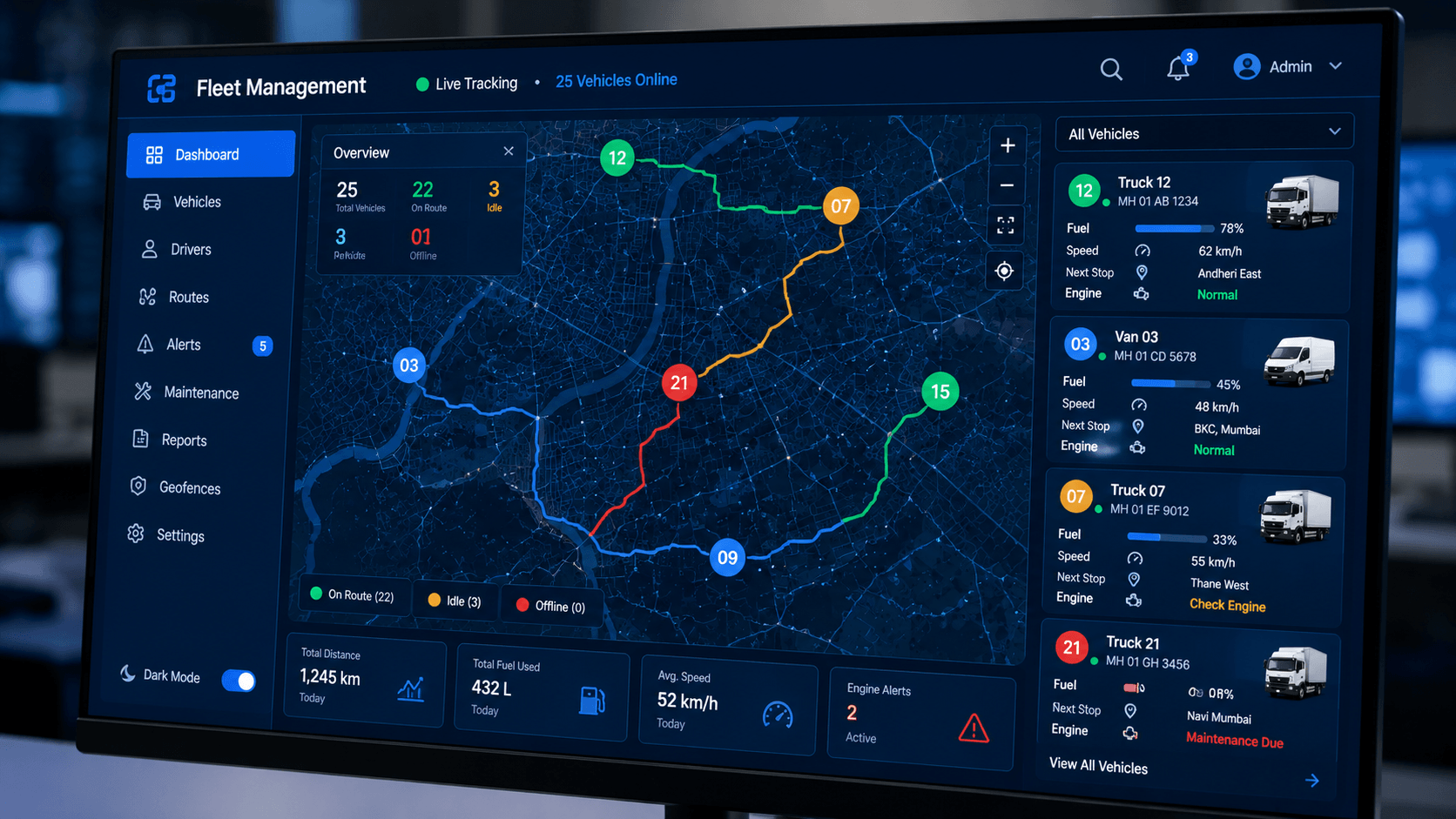
Real-time fleet tracking on cloud platforms gives operations managers live GPS positions, vehicle health data, fuel consumption, and driver behaviour scores across every vehicle in the fleet simultaneously. Unlike traditional tracking systems that update on fixed intervals, cloud-connected fleet management software streams data continuously, enabling dispatchers to intervene before a late delivery becomes a missed SLA or a low-fuel alert becomes a breakdown on the motorway.
Fleet route optimization with cloud software uses live traffic data, delivery time windows, vehicle load capacities, and fuel cost models to recalculate optimal routes dynamically throughout the day. A vehicle rerouted around a road closure does not need a dispatcher to intervene manually. The cloud platform calculates the optimal alternative and pushes the updated route to the driver's device within seconds. Across a fleet of any size, that responsiveness compounds into measurable fuel savings and on-time delivery improvement every day.
Cloud-connected fleet management software also monitors engine health, tyre pressure, brake wear, and service intervals across the entire fleet in real time. When a vehicle shows early indicators of a component issue, the system flags it for scheduled maintenance before a roadside breakdown disrupts a delivery run. The cost difference between a planned service and an emergency recovery, including lost delivery time, is significant for any fleet operating at scale.
Step-by-Step: How Cloud-Connected Fleet Management Works
From vehicle sensor to operations decision, the full flow in real time:
- Vehicle sensors stream data: location, speed, fuel level, engine health, and load weight continuously
- Cloud platform aggregates data across all fleet vehicles into a single live operations view
- Route optimizer recalculates delivery sequences based on live traffic, time windows, and vehicle capacity
- Driver receives updated route on mobile device without dispatcher intervention
- Operations manager views live fleet status, ETA updates, and exception alerts on a unified dashboard
- Maintenance alerts fire for vehicles showing early fault indicators before failure occurs
- Delivery completion triggers automatic WMS inventory update across connected warehouse systems
No manual handoff between dispatch, fleet, and warehouse. One platform, live data, every step.
How Cloud Integration Transforms Warehouse Operations?
On the warehouse side, cloud integration for logistics delivers the same shift from reactive to real-time that it delivers for fleet. Inventory decisions become accurate. Picking processes become consistent. And throughput scales without requiring proportional headcount growth.
Warehouse Management System Integration on Cloud
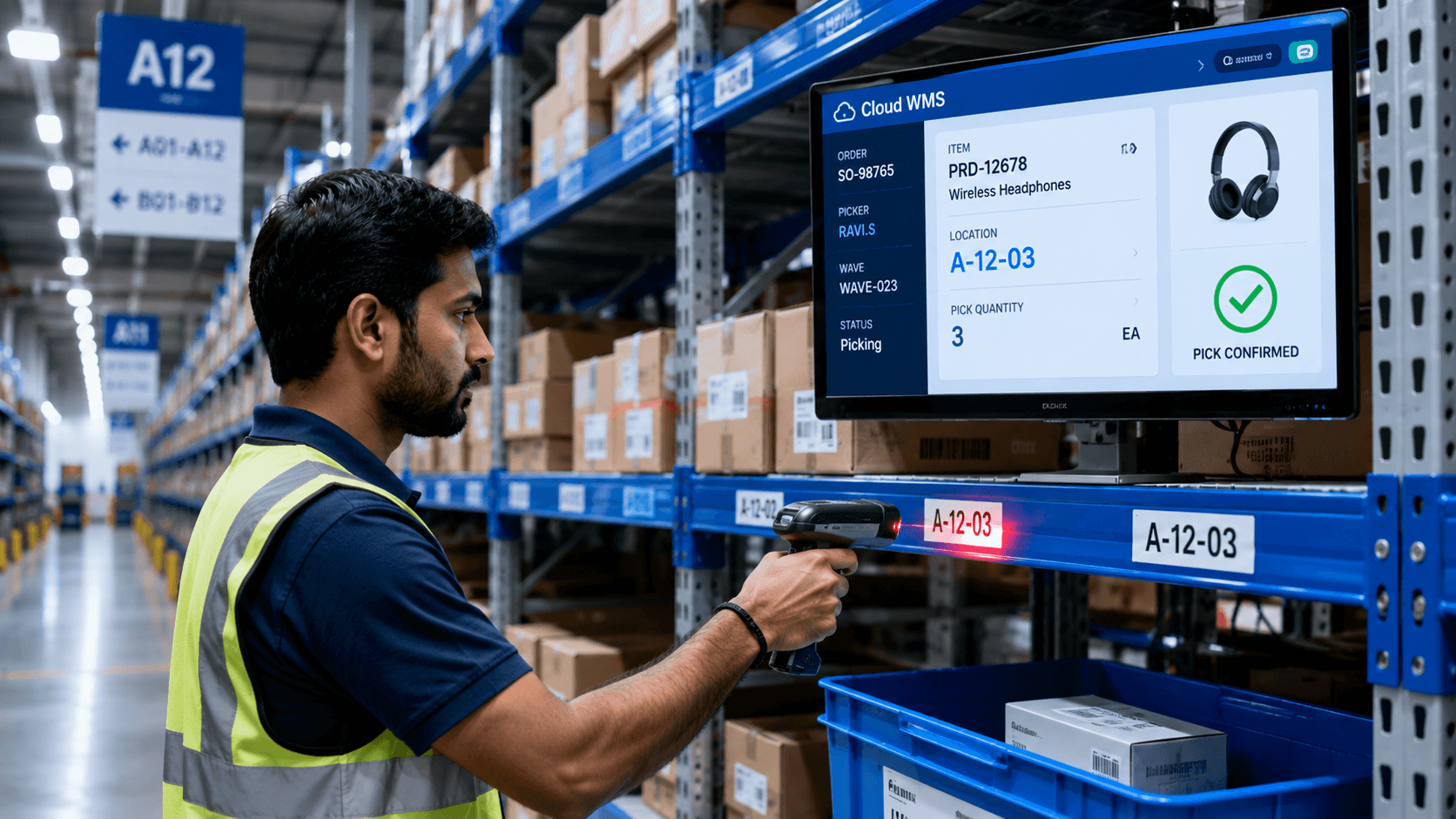
Warehouse management system integration on cloud eliminates the data silos that slow down every stage of the inbound and outbound workflow. When goods receipt, put-away, picking, packing, and dispatch all run through a single cloud-connected WMS, inventory accuracy improves, picking errors fall, and throughput increases. Operations leaders can leverage logistics and supply chain managed services to design WMS integrations that connect seamlessly with existing ERP systems and third-party logistics providers without a full platform replacement.
Cloud-based warehouse inventory management gives buyers, planners, and operations managers a single accurate view of stock levels across every location in real time. Replenishment triggers fire automatically when stock drops below threshold. Slow-moving inventory is flagged before it becomes a write-off. Seasonal demand spikes are absorbed by systems that scale on demand without requiring additional servers or IT infrastructure investment.
Automated warehouse operations powered by cloud platforms coordinate picking systems, conveyor flows, and human pickers from a single orchestration layer. When a cloud-connected WMS knows what needs to be picked, where it is stored, and which resource is available, throughput per hour increases and error rates fall. For high-volume distribution centres processing thousands of orders daily, that efficiency compounds across every shift.
We'll map the exact workflows from this article to your business - free, in 30 minutes.
Cloud WMS vs On-Premise WMS: Comparison
The Business Case: Reducing Logistics Operational Costs with Cloud
The financial case for reducing logistics operational costs with cloud is built from several compounding sources. Route optimization cuts fuel costs. Predictive maintenance reduces emergency repair and vehicle downtime costs. Automated warehouse operations reduce picking error rates and the labour hours spent on rework. Inventory accuracy reduces emergency restocking and write-off costs. None of these is a theoretical saving. Each is a direct cost line that a connected cloud logistics platform addresses operationally.
The scalability benefit of a cloud logistics platform for fleet operations is particularly significant for logistics businesses that experience seasonal peaks or rapid growth. On-premise systems require hardware investment ahead of demand. Cloud platforms scale on demand, absorbing peak volumes without capital expenditure. For businesses where peak season means triple the order volume across fleet and warehouse simultaneously, that elasticity is operationally critical. For a broader view of how AI-driven forecasting enhances the commercial value of a connected logistics platform, the predictive supply chain article covers how AI layers on top of cloud infrastructure to further reduce delays and costs.
What a Unified Cloud Logistics Architecture Delivers?
The full value of cloud integration for logistics is realised when fleet management, warehouse operations, inventory control, and analytics all operate from the same data layer. A unified architecture gives operations leaders something that siloed systems structurally cannot provide: a single version of the truth across every part of the logistics operation, updated in real time.
What a connected cloud logistics platform delivers across the operation:
- Unified fleet and warehouse visibility: operations managers see vehicle positions, warehouse stock levels, and order status on one screen simultaneously
- Automated cross-system workflows: delivery completion triggers WMS update, which triggers replenishment, which updates procurement, without manual intervention at any step
- 3PL and ERP integration: third-party logistics providers, ERP platforms, and e-commerce systems connect via APIs without requiring data re-entry
- Scalable peak capacity: cloud infrastructure absorbs volume spikes without hardware investment or performance degradation
- Analytics and forecasting: aggregated operational data across fleet and warehouse feeds demand forecasting, cost modelling, and performance reporting
Understanding how AI adds a further layer of intelligence on top of this cloud foundation is covered in detail in the AI in supply chain article, which explains how predictive models built on connected data reduce delays and costs across logistics operations.
Conclusion
The operational gaps that drive up logistics costs, missed deliveries, inventory inaccuracies, unplanned vehicle downtime, and slow warehouse throughput, are not problems of effort. They are problems of data. Specifically, they are the result of systems that cannot share live information with each other.
Cloud integration for logistics closes those gaps by connecting fleet management, warehouse operations, and inventory control on a single real-time platform. The result is not just operational improvement. It is a structural cost reduction that compounds across every delivery run, every warehouse shift, and every fleet vehicle, every day.
Logistics businesses that build on connected cloud infrastructure now are building the operational foundation that makes growth manageable, peaks absorbable, and costs predictable.
Frequently Asked Questions
1. What is cloud integration for logistics and how does it work?
Cloud integration for logistics means connecting fleet management, warehouse management, inventory control, and route planning systems to a shared cloud data layer that updates in real time. Instead of each system operating in isolation, every operational event, a delivery completed, a stock level updated, a vehicle rerouted, is reflected across all connected systems simultaneously. This eliminates the manual coordination and data reconciliation that drives up cost and response time in traditional logistics operations.
2. How does cloud integration improve fleet management specifically?
Cloud-based fleet management software delivers continuous real-time visibility of vehicle positions, health, and fuel levels. It enables fleet route optimization with cloud software that recalculates routes dynamically based on live traffic, and flags maintenance issues before they become breakdowns. The key improvement over on-premise systems is that all of this happens continuously, not on a fixed update schedule, and the data is available to every stakeholder on any device in real time.
3. What is warehouse management system integration on cloud and what does it deliver?
Warehouse management system integration on cloud connects inbound, storage, picking, packing, and dispatch workflows to a single live data layer. It eliminates manual inventory reconciliation, automates replenishment triggers, and gives operations managers accurate stock visibility across all warehouse locations simultaneously. Cloud-based warehouse inventory management also scales on demand during peak periods without requiring hardware investment.
4. How does cloud integration reduce logistics operational costs?
Reducing logistics operational costs with cloud happens across multiple cost lines simultaneously. Route optimization reduces fuel spend. Predictive maintenance reduces emergency repair costs. Automated warehouse operations reduce picking error rates and rework labour. Inventory accuracy reduces emergency restocking and write-off costs. The compounding effect of these savings across daily operations is what makes cloud integration for logistics one of the highest-ROI technology investments available to logistics businesses today.
5. Is cloud integration for logistics suitable for mid-size operations, not just large enterprises?
Yes. Mid-size logistics businesses often benefit most from cloud integration for logistics because they lack the IT resources to maintain and integrate on-premise systems across multiple depots or warehouse sites. Cloud platforms are available as managed services that require no on-premise infrastructure and scale with the business. The operational improvements, real-time fleet visibility, automated warehouse workflows, and live inventory accuracy, are available from day one of deployment regardless of fleet or warehouse size.
You may also want to read
What Is a Cloud Transformation Assessment? A Guide for Enterprises