Supply chain disruptions have become the norm, with volatility from weather, geopolitics, and demand swings costing enterprises billions annually. Predictive AI models promise to transform logistics by forecasting issues before they occur, enabling proactive rerouting and inventory adjustments that could reduce delays by up to 40% by 2026.
For logistics leaders and supply chain executives, AI in supply chain optimization is no longer optional it's the key to building resilient, efficient operations that integrate seamlessly with retail and e-commerce ecosystems.
Supply Chain Volatility: The Challenge Driving AI Adoption
Why Traditional Methods Are Failing
Global events like port congestion, labor shortages, and sudden demand spikes have exposed the limits of reactive supply chain management. Manual forecasting and siloed systems struggle to handle real-time variables, leading to excess inventory, stockouts, and delivery delays averaging 20-30% longer than pre-pandemic norms.
Logistics providers report that unpredictable disruptions now account for up to 40% of total transit delays, eroding customer trust and inflating costs.
Our engineers will audit your workflow and estimate time-to-value at no cost.
Claim your free audit
The Scale of the Problem
In retail and e-commerce, where omnichannel expectations demand next-day delivery, even small delays cascade into lost revenue and higher return rates. Enterprises need predictive logistics solutions that can ingest diverse data streams - weather, traffic, carrier performance, and market signals to anticipate problems rather than merely react to them.

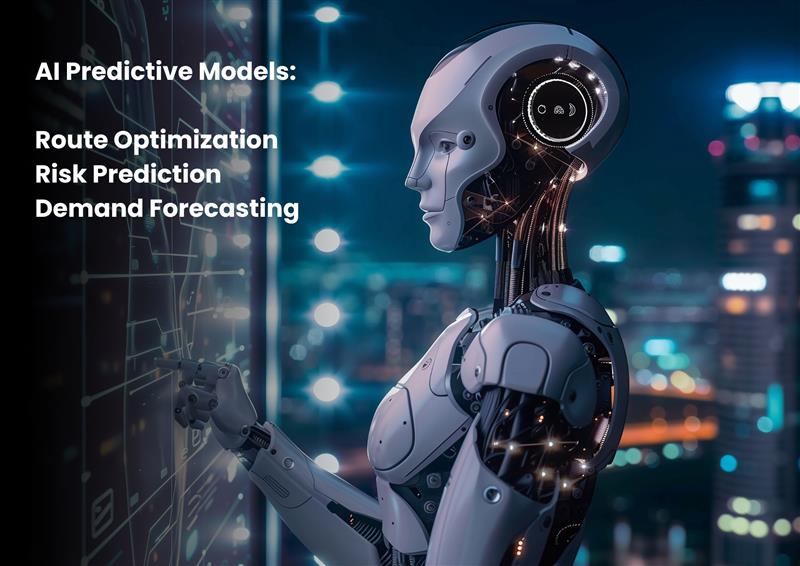
Predictive AI for Routing, Risk, and Demand Forecasting
Dynamic Route Optimization
AI models analyze real-time data from IoT sensors, GPS, weather APIs, and traffic patterns to recommend optimal routes and automatically reroute shipments when delays are predicted. Companies like FedEx and Amazon use these systems to cut delivery times by proactively avoiding bottlenecks, with some reporting 25-35% improvements in on-time performance.
Risk Prediction and Supplier Resilience
Predictive models now scan supplier performance, geopolitical risks, and global events to forecast disruptions weeks in advance. Lenovo, for example, uses AI to predict delivery issues across 2,000+ suppliers, enabling capacity adjustments that maintain consistent output.
Demand Planning with AI Precision
Demand planning AI, built through specialized AI development services, processes historical sales, promotions, seasonality, and external factors to generate probabilistic forecasts that reduce stockouts by up to 50%. Retailers using predictive analytics for retail demand forecasting can align inventory with actual needs, minimizing overstock while ensuring product availability across omnichannel channels.
We'll map the exact workflows from this article to your business - free, in 30 minutes.
Real-Time Data Lakes and Cloud Infrastructure as the Foundation
Why Cloud-Native Data Platforms Matter
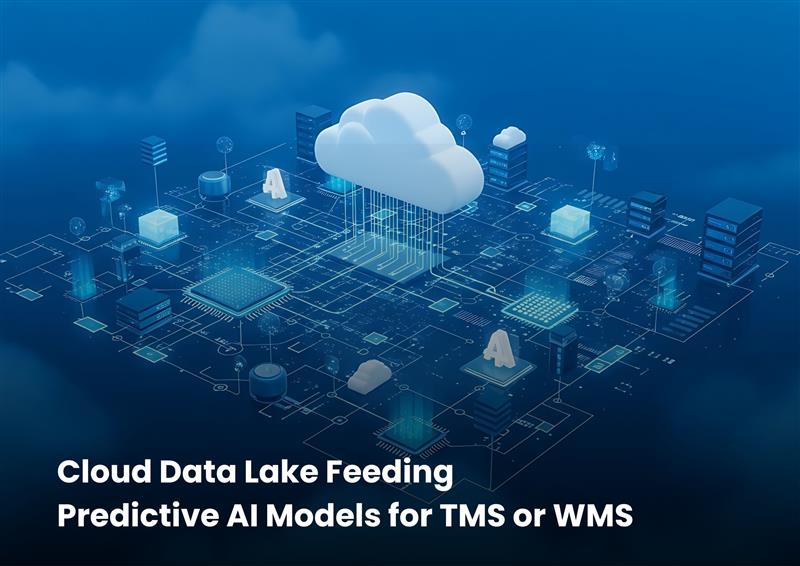
Predictive AI thrives on unified, real-time data lakes that consolidate signals from ERP, TMS, WMS, IoT devices, and external sources. Cloud platforms enable scalable data ingestion and processing without the latency of on-premises systems.
Cloud-Based TMS and WMS Modernization
Legacy transportation management systems (TMS) and warehouse management systems (WMS) lack the APIs and real-time capabilities needed for AI integration. Cloud-based
TMS/WMS modernization allows seamless data flow for predictive models, enabling features like dynamic slotting in warehouses and automated carrier selection.
Agentic AI solutions can even orchestrate end-to-end workflows, from demand signals to fulfillment, using cloud infrastructure to process millions of events per hour.
Retail Supply Chain Integration
For retail and e-commerce, integrating AI with inventory management software for retail creates unified visibility across suppliers, warehouses, and stores, strengthening logistics and supply chain services. This supports retail supply chain management software that handles B2B e-commerce platform implementation alongside consumer channels.
Measurable Impact: Cost Savings and Efficiency Gains
Quantified Delay Reductions
Gartner and McKinsey forecast that mature AI adopters will achieve 30-40% reductions in delivery delays by 2026 through predictive rerouting and demand alignment. Amazon's AI-driven forecasting across 400M+ products demonstrates how these models minimize stockouts while reducing excess inventory by 20-30%.
Cost and Efficiency Metrics
Beyond delays, AI drives 15-25% inventory cost reductions, 10-20% lower transportation expenses, and up to 300% faster warehouse operations through optimized picking and slotting. Predictive maintenance on fleets and equipment further cuts unplanned downtime by 40%.
Retail and E-commerce Benefits
Retailers using predictive analytics for retail demand forecasting report improved omnichannel fulfillment rates and reduced returns, directly boosting margins. E-commerce digital transformation services that modernize warehouse management systems deliver faster order cycle times and stronger customer experience consulting outcomes.
Modernization Roadmap: From Legacy to AI-Powered Supply Chains
Step 1 – Assess and Unify Data Foundations
Start with a data audit to consolidate siloed TMS, WMS, and ERP systems into a cloud data lake, ensuring clean, real-time feeds for AI models.
Step 2 – Deploy Predictive Models Incrementally
Begin with high-impact use cases like demand forecasting and route optimization, using pre-built cloud AI services before custom agentic AI solutions.
Step 3 – Modernize Core Systems
Upgrade to cloud-based TMS/WMS with AI-native APIs, integrating inventory management software for retail and custom POS system development for omnichannel support.
Step 4 – Scale with Governance and Monitoring
Implement AI governance for model accuracy, bias detection, and explainability, while monitoring KPIs like delay reduction and inventory turns.

Pace Wisdom Solutions supports enterprises through this roadmap, combining retail AI solutions, cloud-based TMS/WMS modernization, and predictive analytics for retail demand forecasting to deliver measurable supply chain transformation.
Conclusion: The Path to Predictive Supply Chains
By 2026, predictive AI will move supply chains from reactive firefighting to proactive optimization, delivering the 40% delay reductions needed to meet rising customer expectations. Logistics leaders who invest in cloud infrastructure, real-time data platforms, and AI models today will gain a decisive edge in cost, speed, and reliability.
Pace Wisdom Solutions stands ready as your e-commerce digital transformation partner, helping modernize warehouse management systems, implement retail supply chain management software, and deploy predictive logistics that power resilient, future-proof operations.
Also read: Retail Cloud Cost Optimization: 7 AI Strategies for CTOs
You may also want to read