As a CTO, you are likely seeing exploding cloud bills as AI workloads for personalization, pricing, and supply chain prediction consume more computing and storage than ever. Cloud cost optimization in retail will define competitive advantage in 2026, with mature adopters achieving 30-50% savings through AI retail operations and GenAI workload discipline.
CTOs and cloud architects must rethink infrastructure for AI-driven workloads like demand forecasting, dynamic pricing, and real-time inventory, turning cloud spend from a liability into a strategic asset.
Retail Cloud Spending Challenges in the AI Era
Why Retail Cloud Costs Are Spiraling
Peak-season traffic, omnichannel personalization, and GenAI workloads like image generation for product catalogs drive unpredictable GPU and storage usage. Legacy applications running alongside AI services create architectural waste, with underutilized instances and forgotten data lakes inflating bills.
The Scale of the Problem
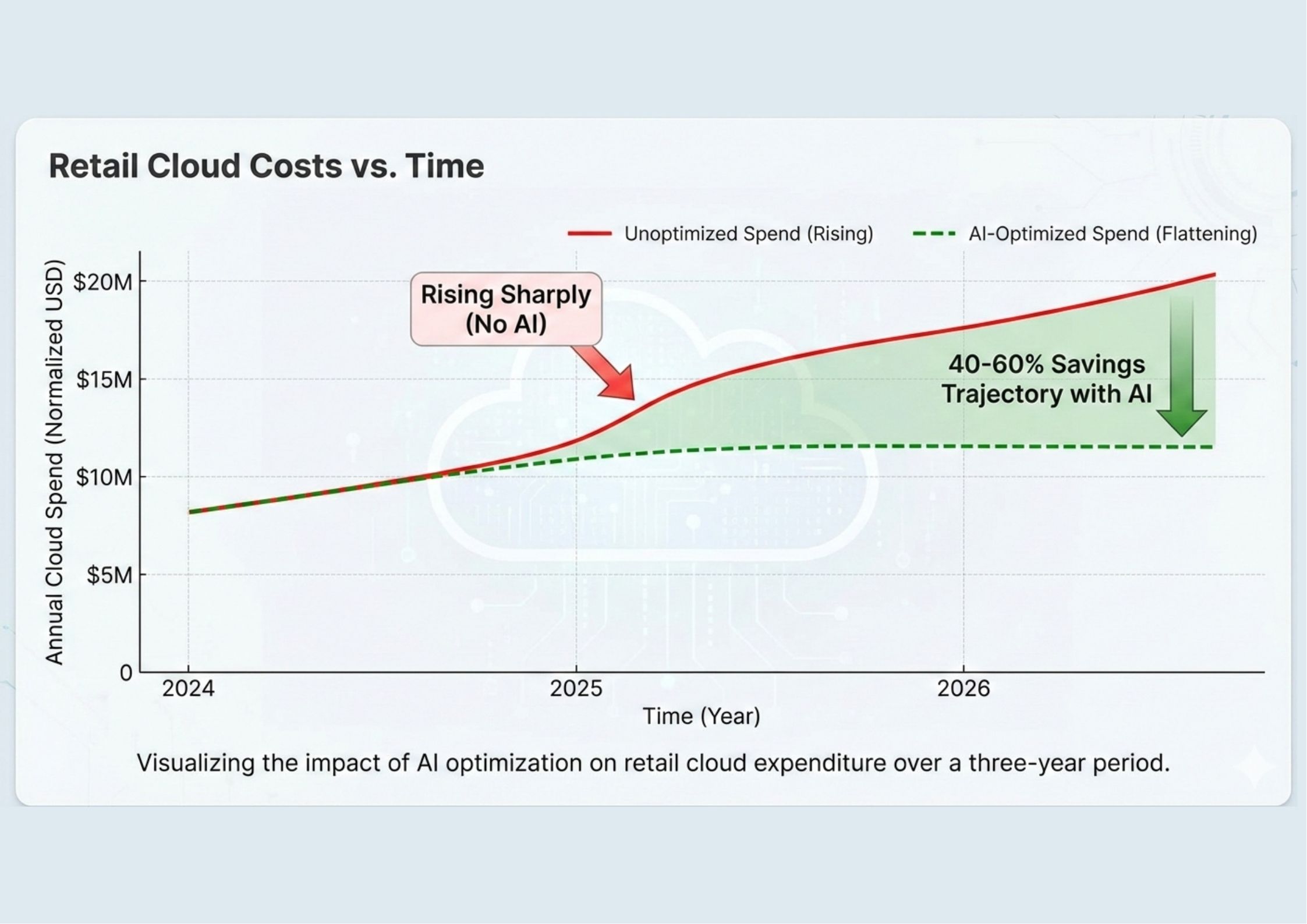
Retail cloud spends grew 40% year-over-year in 2025, with AI workloads accounting for 25% of total costs despite representing only 10% of usage. Without retail cloud modernization, enterprises risk margin erosion as AI innovation outpaces cost governance.
Our engineers will audit your workflow and estimate time-to-value at no cost.
Claim your free audit
Strategy 1: AI Tools for SKU Planning and Demand Forecasting
Right-Sizing Compute for Predictability
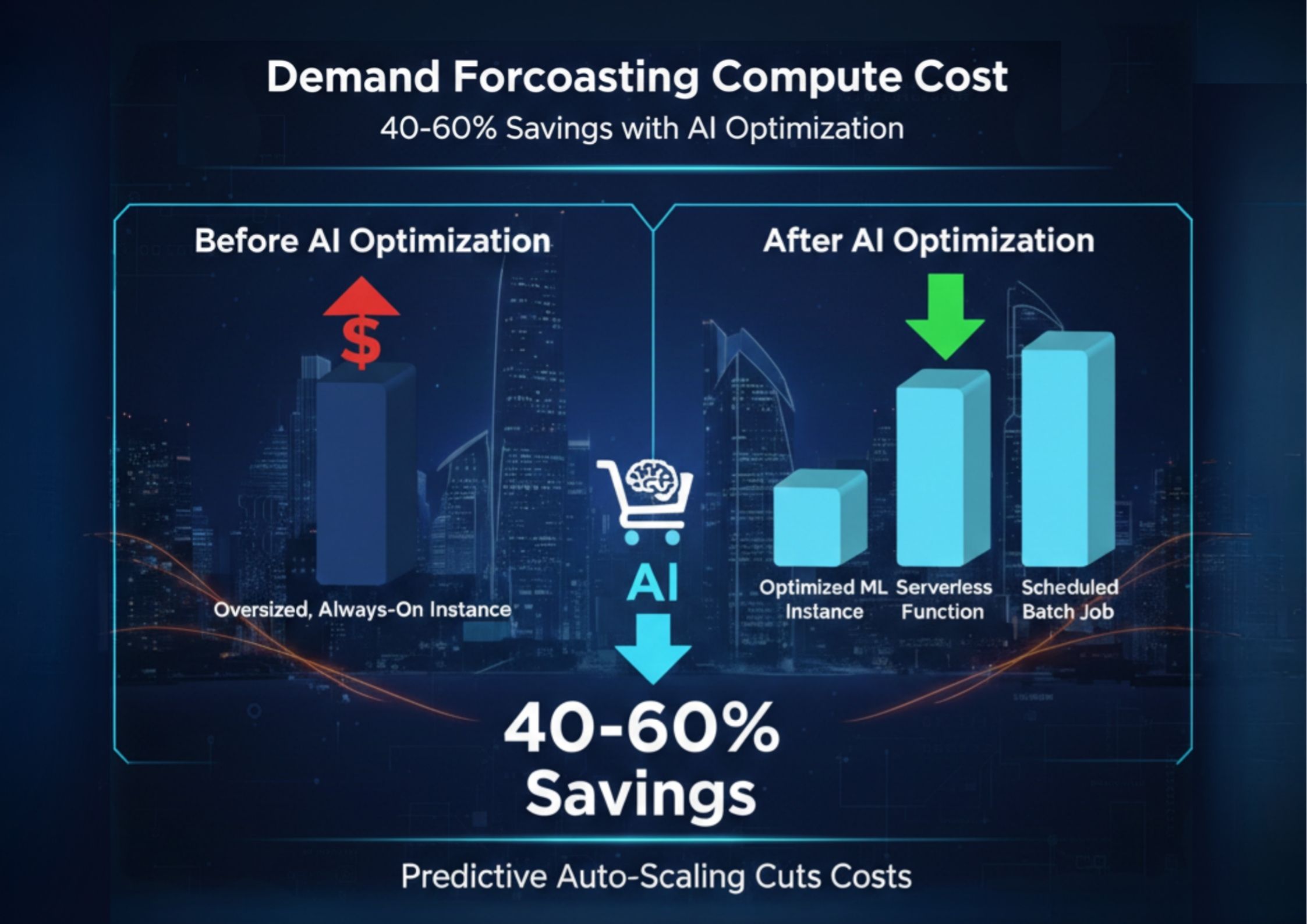
Predictive models for SKU-level demand forecasting and replenishment can run on smaller, cheaper instances than general-purpose compute by using specialized ML frameworks and scheduled batch processing. Retailers like Target use AI-powered operations centers to consolidate 20+ data sources, identify issues and automating resolutions without overprovisioning.
At Pace Wisdom, we often see clients struggling with this challenge, where legacy batch jobs run on oversized instances 24/7. Switching to optimized ML instances and serverless inference cuts forecasting costs by 40-60% while maintaining accuracy.
Strategy 2: Texture and Image Optimization Workloads
GPU Optimization for Visual AI
GenAI workloads generating product images, virtual try-ons, and catalog visuals are GPU-heavy but highly bursty. Use spot GPUs for non-real-time generation, caching frequently requested textures, and model quantization to run on lower-cost accelerators.
Cost Impact
Image optimization strategies reduce GPU spend by 50-70% through caching, batching, and rightsizing.
Strategy 3: Serverless Architectures for Peak Traffic
Scale-to-Zero for Personalization
Serverless functions handle Black Friday traffic spikes without idle capacity costs during off-peak periods. Real-time personalization agents invoke only when customers engage, eliminating baseline compute for dormant services.
Cost Impact
Serverless reduces personalization costs by 60-80% compared to provisioned containers during variable demand.
Strategy 4: Container Orchestration with AI Workload Awareness
Kubernetes for Mixed Workloads
Containers excel for steady-state AI workloads like recommendation engines and fraud detection, with autoscaling tuned to prediction intervals rather than traffic spikes. Multi-cluster federation across clouds optimizes regional pricing differences.
Cost Impact
Container optimization delivers 30-50% savings on stable AI services through bin-packing and rightsizing.
We'll map the exact workflows from this article to your business - free, in 30 minutes.
Strategy 5: FinOps with AI-Driven Cost Intelligence
Proactive Cost Anomaly Detection
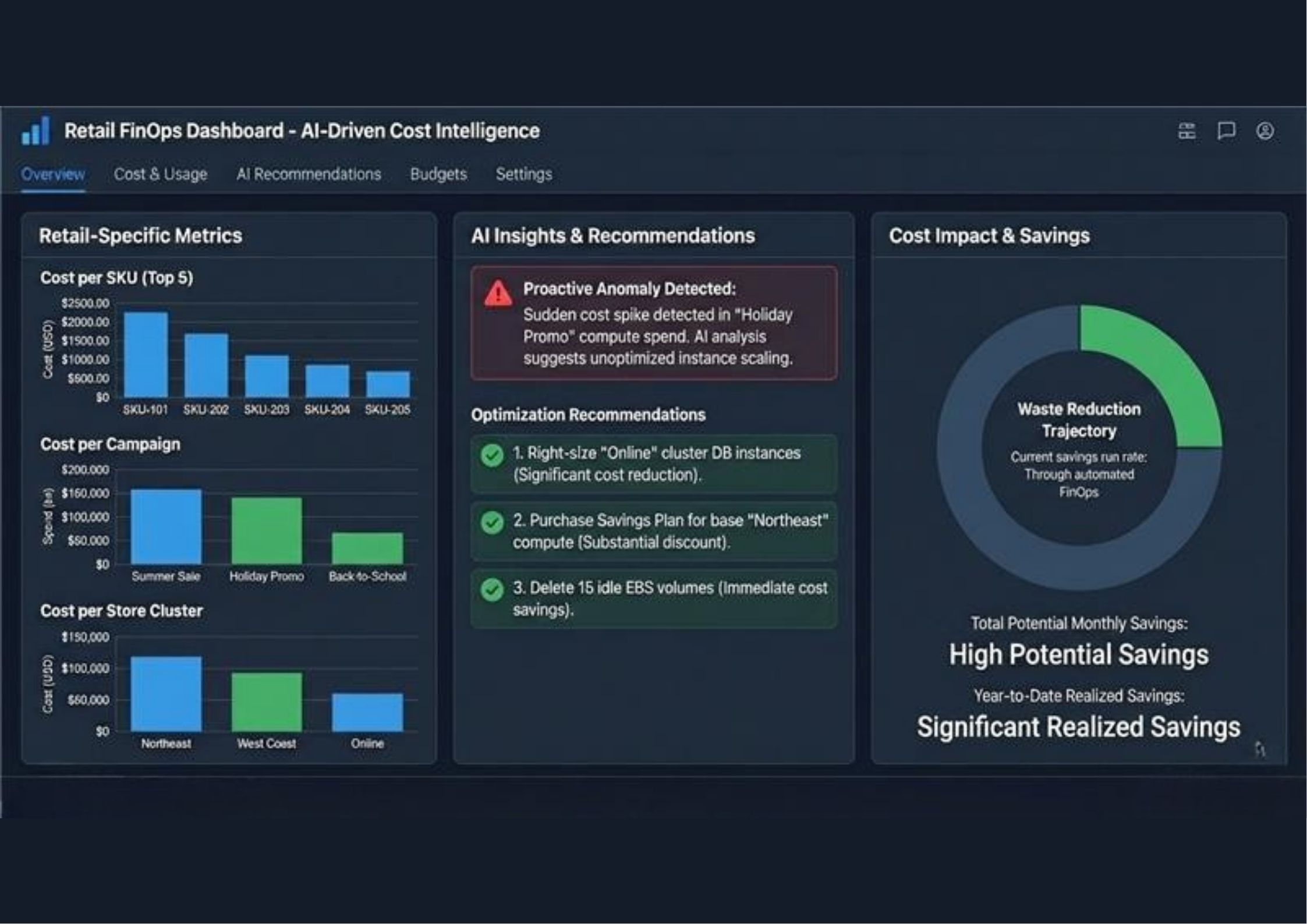
AI-powered FinOps tools analyze usage patterns to predict overspend and recommend optimizations before bills arrive. Retail-specific dashboards track cost per SKU, cost per campaign, and cost per store cluster.
Cost Impact
Automated FinOps reduces waste by 20-30% through continuous optimization recommendations.
Also read: 5 Ways Gen AI is Reshaping Cloud Architecture Costs
Strategy 6: Data Tiering and Lifecycle Management
Smart Storage for Retail Data Lakes
Tier customer data, transaction logs, and ML training datasets to the lowest viable storage class, with AI-driven lifecycle policies automating archival. Compress embeddings and historical sales data without losing query performance.
Cost Impact
Data tiering cuts storage costs by 40-60% while maintaining analytics performance.
Strategy 7: Retail Cloud Modernization with Agentic AI
Custom Agentic AI for End-to-End Optimization
Agentic AI solutions orchestrate pricing, inventory, and marketing workflows across fragmented systems, reducing redundant compute through unified decisioning. Serverless agents scale dynamically while maintaining context across e-commerce retail solution development stacks.
For one of our retail partners, applying this strategy reduced costs by 35% while unifying their personalization and inventory systems. Agentic orchestration eliminates 25-40% of duplicate processing across siloed retail applications.
Real-World Retail Case Study: From Cloud Chaos to AI Efficiency
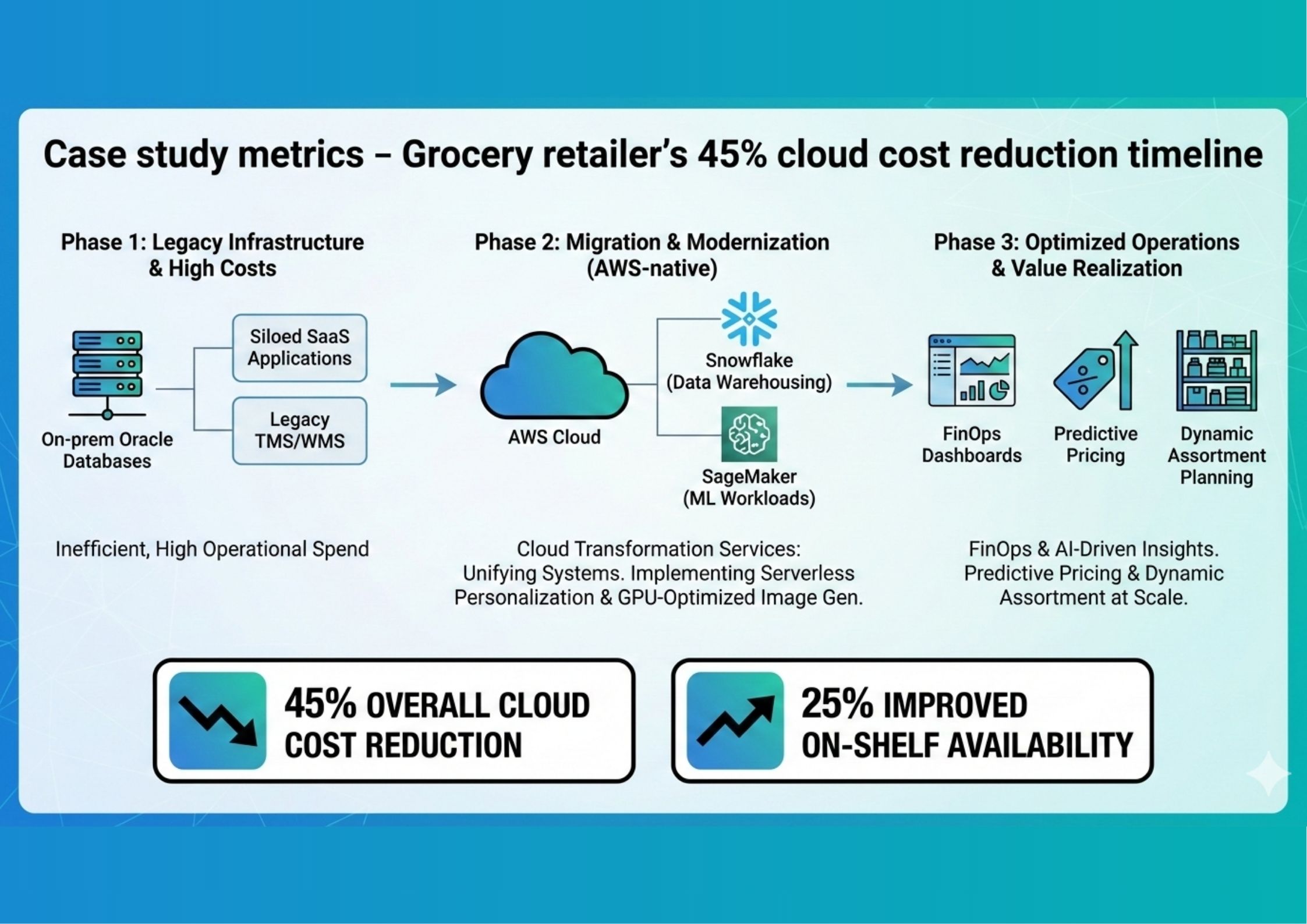
A major grocery chain modernized its infrastructure by moving from on-prem Oracle databases and siloed SaaS applications to AWS-native architecture with Snowflake for data warehousing and SageMaker for ML workloads. By implementing serverless personalization, GPU-optimized image generation, and FinOps dashboards, they achieved a 45% overall cloud cost reduction while improving on-shelf availability by 25%.
The transformation included cloud transformation services that unified legacy TMS/WMS with modern AI workloads, enabling predictive pricing and dynamic assortment planning at scale.
Conclusion: Retail Cloud Modernization Is Mission Critical
Retail cloud cost optimization in 2026 demands AI retail operations discipline across compute, storage, and architecture. The seven strategies outlined optimized ML workloads, texture caching, serverless scaling, container intelligence, AI FinOps, data tiering, and agentic orchestration collectively deliver 40-60% savings while accelerating innovation.
With deep expertise in cloud modernization and digital transformation services, Pace Wisdom helps retailers build AI-optimized infrastructure that drives margins and customer loyalty.
Also read: The Rise of AI Agents and More: Key AI Trends Set to Influence Businesses
You may also want to read