Imagine walking into a store where every product on the shelf was chosen just for you - your style, your size, your budget, your mood that day. That is what GenAI in retail is making possible online, and increasingly in physical stores too.
GenAI, or Generative AI, uses smart models that learn from customer data to create personalised shopping experiences in real time. Unlike older systems that showed the same product recommendations to everyone in a broad category, GenAI understands each shopper individually — what they clicked, what they skipped, what they bought before — and responds accordingly.
The results speak for themselves. Retailers using AI-powered personalisation are seeing revenue grow 10–40% faster than those still relying on manual rules and static segments. In 2026, this technology is no longer an experiment. It is how the best retailers are operating.
In this guide, we break down:
- What GenAI in retail actually means (in plain English)
- The key use cases delivering real results right now
- How it improves the customer experience
- The challenges to watch out for — and how to solve them
- What is coming next in 2026 and beyond
What Is GenAI in Retail?
In simple terms, GenAI (Generative AI) in retail means using AI models that can create — not just analyse. Instead of following a fixed set of rules like "show winter coats to people in cold regions," these models generate fresh, tailored responses for each customer, each session, each moment.
How Is It Different from Traditional Retail AI?
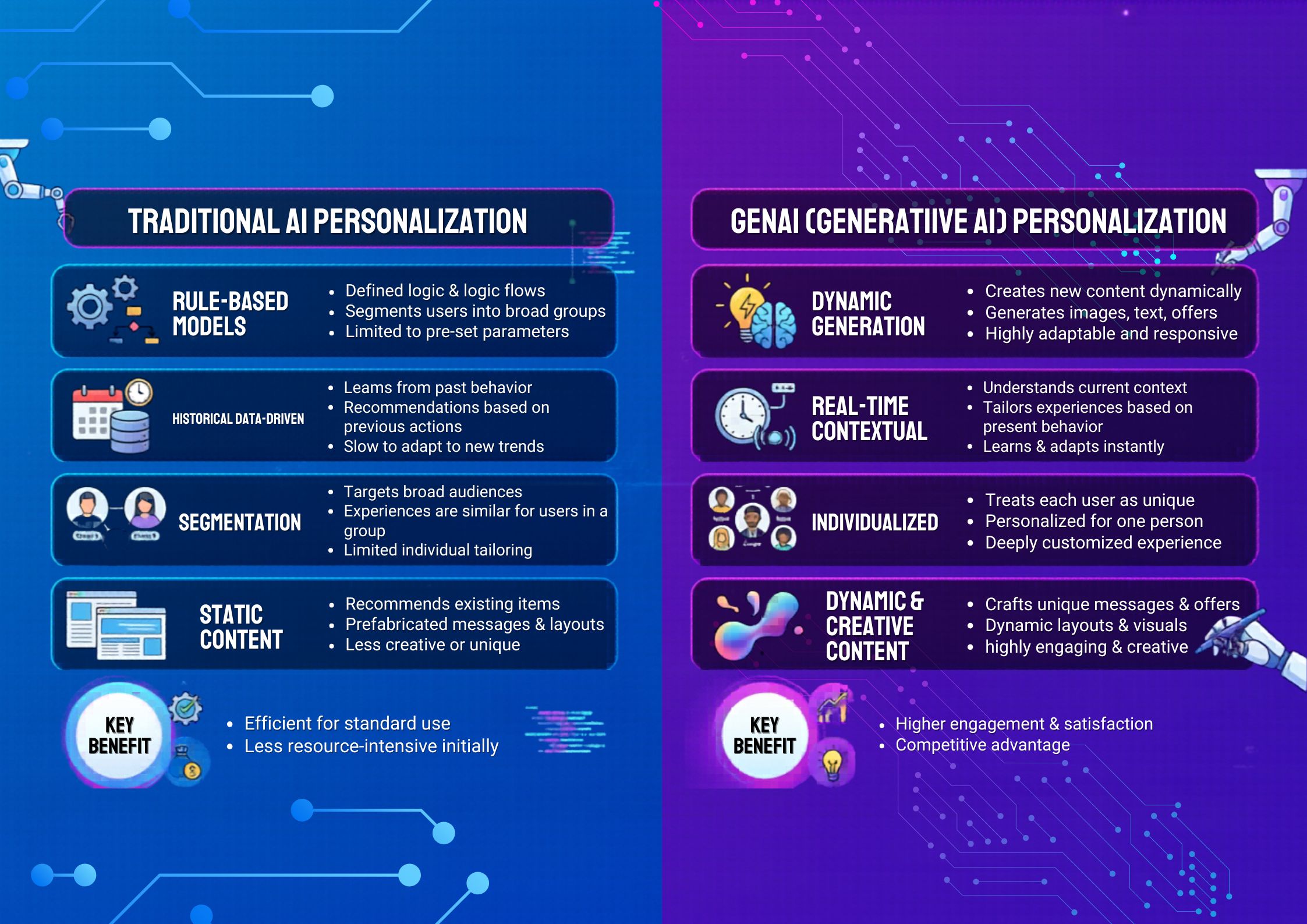
Traditional AI in retail worked by sorting customers into groups and matching those groups to products. It was useful but limited. GenAI goes several steps further:
- Traditional AI: "Customers who bought X also bought Y" — broad pattern matching
- GenAI: "This specific customer, right now, based on this session + history + context, would most likely want Z" — individual-level intelligence
- Traditional AI: Updated weekly or monthly from batch data
- GenAI: Adapts in real time, within the same browsing session
- Traditional AI: Content and recommendations stay largely static
- GenAI: Generates dynamic content — descriptions, emails, styling suggestions — on the fly
Why Does Data Infrastructure Matter So Much?
GenAI is only as smart as the data it learns from. A retailer whose customer data is scattered across multiple disconnected systems — website, app, email, in-store POS — cannot build effective personalisation because the AI has no complete picture of any single customer.
This is why the most successful retail AI deployments in 2026 begin with a Customer Data Platform (CDP): a system that pulls all customer signals into one unified profile. Once that foundation is solid, the AI can act on it fast.
Retailers looking to build this kind of data-to-AI pipeline can explore how Pace Wisdom approaches it through their retail and eCommerce solutions.
Key Applications of GenAI in Retail
GenAI is not a single tool — it is a set of capabilities being applied across the entire retail operation. Here are the most impactful use cases in 2026:
1. Smarter Product Recommendations
This is where most retailers start — and where the ROI is fastest.
Traditional recommendation engines show products based on purchase history alone. GenAI-powered recommendations factor in:
- What the shopper is looking at right now in this session
- What items they lingered on versus scrolled past quickly
- Current stock availability and pricing
- Time of day, season, and local context
- Their style preferences based on past behaviour
The result is a shopping experience that feels intuitive — like the site understands what you are looking for before you do.
2. Personalised Customer Journeys Across Every Channel
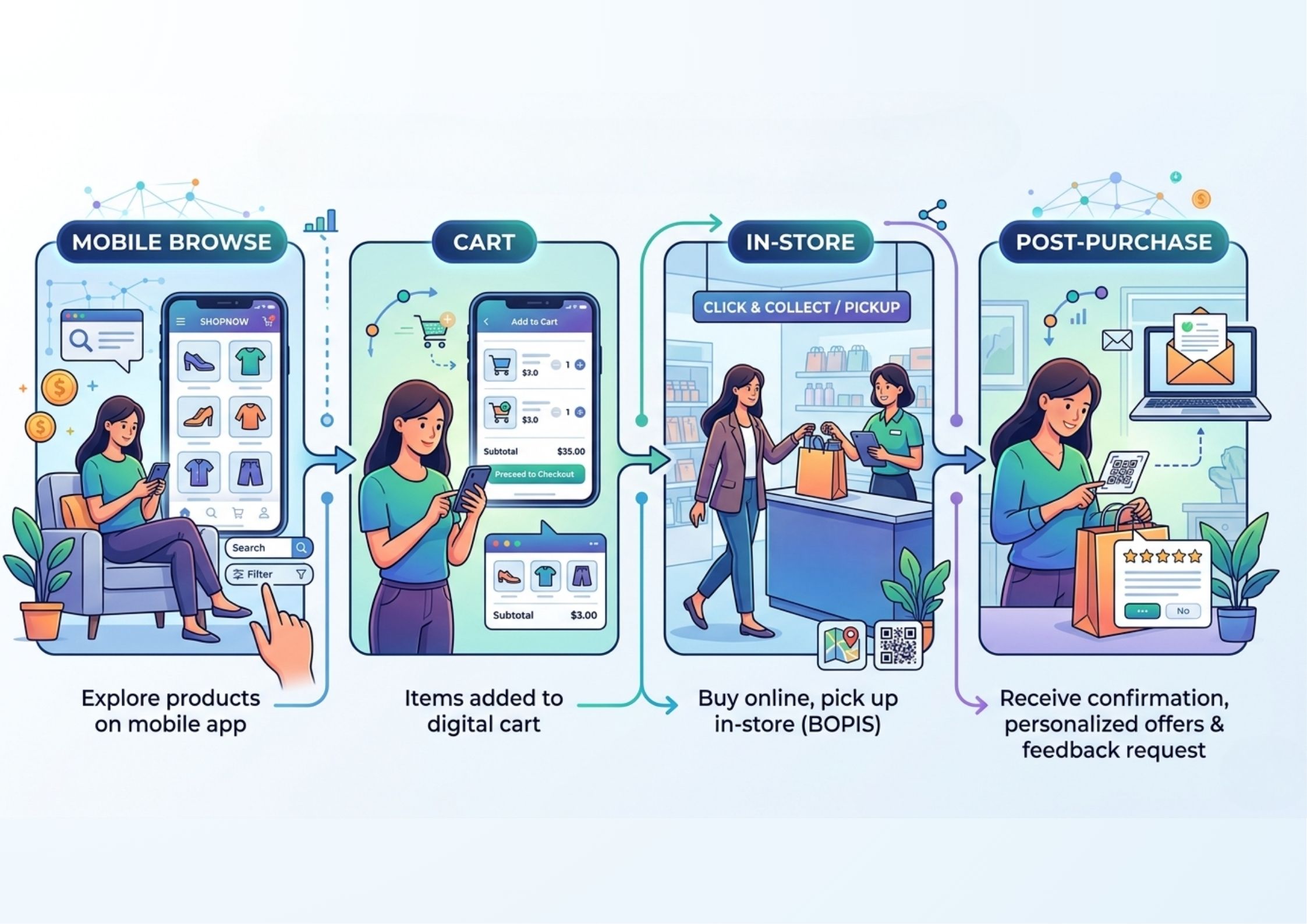
A customer does not just shop in one place. They browse on their phone, visit the website, walk into the store, open emails, and scroll social media. GenAI enables retailers to connect all of those touchpoints into one seamless, consistent journey.
Here is what that looks like in practice:
- Before purchase: AI personalises the homepage, search results, and product page content based on individual browsing behaviour
- During purchase: Smart cart prompts suggest relevant add-ons and flag items the shopper viewed earlier
- After purchase: Personalised follow-up emails, reorder reminders calibrated to that customer's typical buying cadence, and loyalty rewards that feel relevant rather than generic
3. Virtual Try-Ons and Conversational Shopping
One of the biggest barriers to online retail has always been uncertainty — will this jacket actually look good on me? Will this sofa fit in my living room?
GenAI is solving this in two ways:
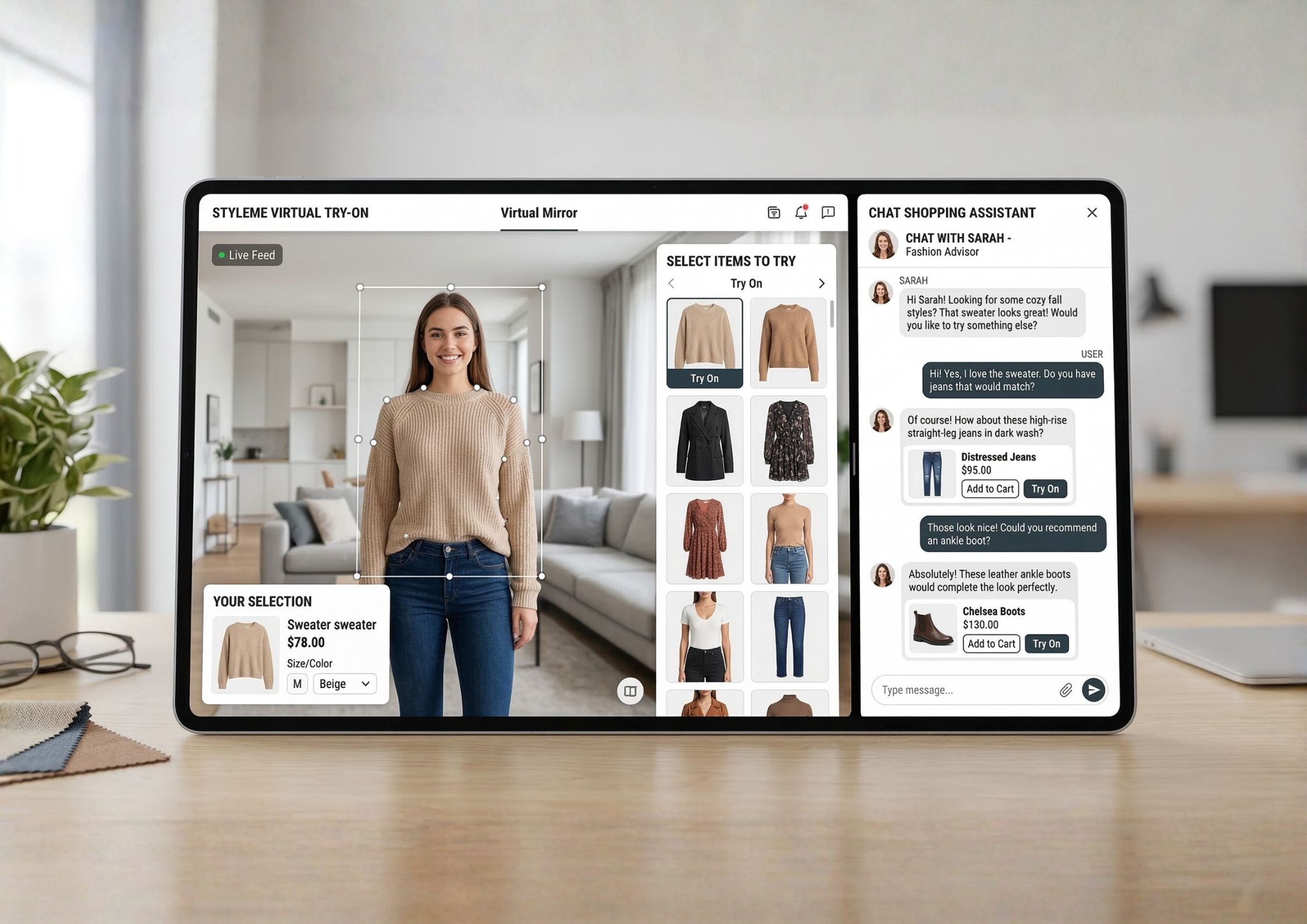
- Virtual try-on tools: Shoppers can see how clothing, eyewear, or furniture looks on their body or in their home using AI-powered AR overlays. Sephora's skin analysis tool and Warby Parker's AR eyewear fitting are now industry benchmarks for this.
- Conversational shopping assistants: Instead of searching through filters, shoppers describe what they want in plain language — "a smart-casual outfit for a rooftop dinner" — and the AI generates a shoppable, complete recommendation instantly.
These tools are no longer exclusive to big retailers. Modular AI platforms have made them accessible to mid-market brands too.
4. AI-Powered Retail Analytics
Behind the scenes, GenAI is changing how retail decisions get made. Rather than reviewing reports that tell you what happened last month, AI analytics tell you what is likely to happen next — and what to do about it.
Key capabilities include:
- Demand forecasting at the product level — predicting stock needs before shortages occur
- Trend detection from social media and search data, weeks before sales data reflects it
- Sentiment analysis across thousands of customer reviews to identify product issues early
- Real-time pricing intelligence based on inventory levels and competitor activity
Benefits of GenAI in Retail — What the Numbers Show
The performance gap between retailers using GenAI and those still running on legacy systems is becoming measurable and significant. Here is a direct comparison:
Beyond revenue, GenAI also delivers operational benefits that compound over time:
- Fewer returns — because virtual try-ons and better recommendations reduce mismatched purchases
- Lower content costs — AI generates product descriptions, emails, and ad copy in a fraction of the time
- Faster decision-making — predictive analytics reduces the lag between a market shift and a merchandising response
- Improved customer retention — personalised post-purchase journeys increase repeat purchase rates significantly
Common Challenges — and How to Overcome Them
Deploying GenAI in retail is not without its hurdles. Here are the most common ones — and what leading retailers are doing about them:
Challenge 1: Data Privacy and Compliance
Deep personalisation requires detailed customer data. That creates tension with privacy regulations like GDPR and CCPA — especially for features involving cameras or biometric data.
How retailers are solving it:
- Federated learning — AI models train on customer data without it ever being centralised or exposed
- Differential privacy — statistical techniques that add protective noise to data, preventing individual-level identification
- Consent-first design — making it easy and rewarding for customers to opt in, turning data sharing into a value exchange
- Zero-party data strategies — asking customers directly for their preferences rather than inferring everything
Challenge 2: Fragmented Data
Most retailers have customer data spread across dozens of systems — web analytics, CRM, email platform, POS, loyalty programme. GenAI cannot work well without a unified view.
The solution is to invest in a Customer Data Platform before deploying AI. Clean, connected data is the foundation. Without it, even the best AI model will produce generic, unreliable outputs.
Challenge 3: Getting Buy-In on ROI
Some retail executives are hesitant to invest in GenAI because the returns can take time to show up in headline metrics.
The practical fix: start with a narrow, high-ROI use case (product recommendations are the most common starting point), measure rigorously, and use those results to justify broader
investment. A phased approach nearly always builds more confidence — internally and externally — than a big-bang deployment.
GenAI in Retail: Trends to Watch in 2026 and Beyond
The technology is evolving fast. Here are the five developments that will shape the next phase of retail AI:
- Multimodal AI — Shoppers search by photo, voice, or description — not just keywords. AI understands images, audio, and text together.
- Edge AI in Stores — On-device AI runs in fitting rooms, on digital shelf labels, and at kiosks — no cloud needed. Real-time personalisation in physical retail.
- Agentic AI — AI that doesn't just recommend but acts — reordering stock, launching campaigns, adjusting prices based on live competitive signals.
- Synthetic Training Data — AI models trained on synthetic data reduce reliance on real customer data, easing privacy concerns without sacrificing model quality.
- Sustainability AI — Predictive personalisation reduces returns and overstock — cutting waste while improving margins.
Research tracking these in-store and phygital deployments, including Cleveroad's generative AI in retail analysis, points to edge AI and physical-digital convergence as the defining capability shift of the next 12–18 months.

Conclusion
GenAI in retail is not a future concept; it is today's competitive advantage. Retailers using it are converting more shoppers, keeping them longer, and spending less effort on content and operations. Those still running on static rules and broad segments are already feeling the gap.
The good news is the path to getting started is clearer than ever:
- Get your customer data unified and clean first
- Start with one high-ROI use case, usually product recommendations
- Measure the results and use them to fund the next phase
- Build toward omnichannel personalisation and predictive analytics over time
The retailers that move deliberately and build on solid data foundations will be the ones that compound returns as the technology continues to advance.
For teams ready to take that first step, Pace Wisdom's AI/ML development services offer structured implementation pathways, from data infrastructure through to deployed personalisation systems.
Frequently Asked Questions About GenAI in Retail
1. What does GenAI in retail actually mean?
GenAI in retail means using generative AI — models that can create new content and responses — to make shopping experiences more personalised and more useful. Instead of following rigid rules, these systems learn from each customer's behaviour and respond with relevant product suggestions, content, and interactions tailored to that individual in real time.
2. How does AI personalisation increase retail revenue?
Personalisation increases revenue by showing customers products they are more likely to want — which lifts conversion rates, increases basket size, and brings people back more often. McKinsey data shows that retailers who lead on personalisation grow revenue 40% faster than average. Recommendation engines alone can account for up to 31% of session revenue when customers actively engage with them.
3. Is GenAI only for large enterprise retailers?
No. Cloud-native AI platforms and modular tools have brought the cost of entry down significantly. Mid-market and growing retailers can start with a single use case — AI product recommendations or a shopping chatbot — prove the return, and scale from there. The key is not to try and deploy everything at once.
4. What are the most important use cases of GenAI in retail right now?
The top use cases delivering measurable ROI in 2026 are:
(1) AI product recommendations,
(2) personalised omnichannel customer journeys,
(3) virtual try-on and conversational shopping assistants, and
(4) predictive retail analytics for demand forecasting and trend detection.
Most retailers start with recommendations because the feedback loop is fast and attribution is straightforward.
5. How do retailers protect customer privacy when using AI?
The leading techniques are federated learning (AI trains without centralising personal data), differential privacy (protective noise prevents individual identification), and zero-party data strategies (customers voluntarily share preferences in return for better experiences). Done well, privacy-first AI design builds customer trust rather than eroding it.
6. What is a Customer Data Platform and why does retail AI need one?
A Customer Data Platform (CDP) is a system that brings together all your customer data — from website behaviour, in-store transactions, email engagement, app usage, and more — into one complete, real-time profile. GenAI personalisation depends on having that unified view. Without it, the AI is working with an incomplete picture, and the recommendations it produces will be generic and often wrong.
7. What GenAI retail trends should businesses prepare for in 2026?
The five trends to watch are: multimodal AI search (by image and voice), edge AI in physical stores, agentic AI that acts autonomously on behalf of the retailer, synthetic training data to ease privacy constraints, and sustainability-driven AI that cuts returns and overstock through better personalisation. Retailers building toward these capabilities now will have a structural advantage as they become mainstream.